Guide to CBD regulations in Denmark (2025)
CBD products have become very popular in Denmark in recent years. The popularity is due, among other things, to an increasing focus on natural products, wellness and alternative treatment. But the rules can be complex and confusing — especially because there is a difference between what the seller is allowed to market and what the buyer is allowed to own and use.
This article provides a complete guide to the Danish regulations for CBD products in 2025, divided by product category.
⚠️ NOTE: Regulations may change, so always be aware of updated legislation before buying or selling CBD.
🌱 General rules for CBD in Denmark
CBD (cannabidiol) is legal in Denmark as long as the product contains less than 0.2% THC (tetrahydrocannabinol — the psychoactive component in cannabis).
Important facts:
- THC content is measured in percentage and documented via laboratory tests.
- Products must be made from EU-approved hemp varieties.
- The products are classified differently depending on their use: dietary supplements, cosmetics, technical products, etc.
- CBD is classified differently in Denmark depending on the type of product, which means different requirements for labeling and sales permits.
🌿 CBD oil
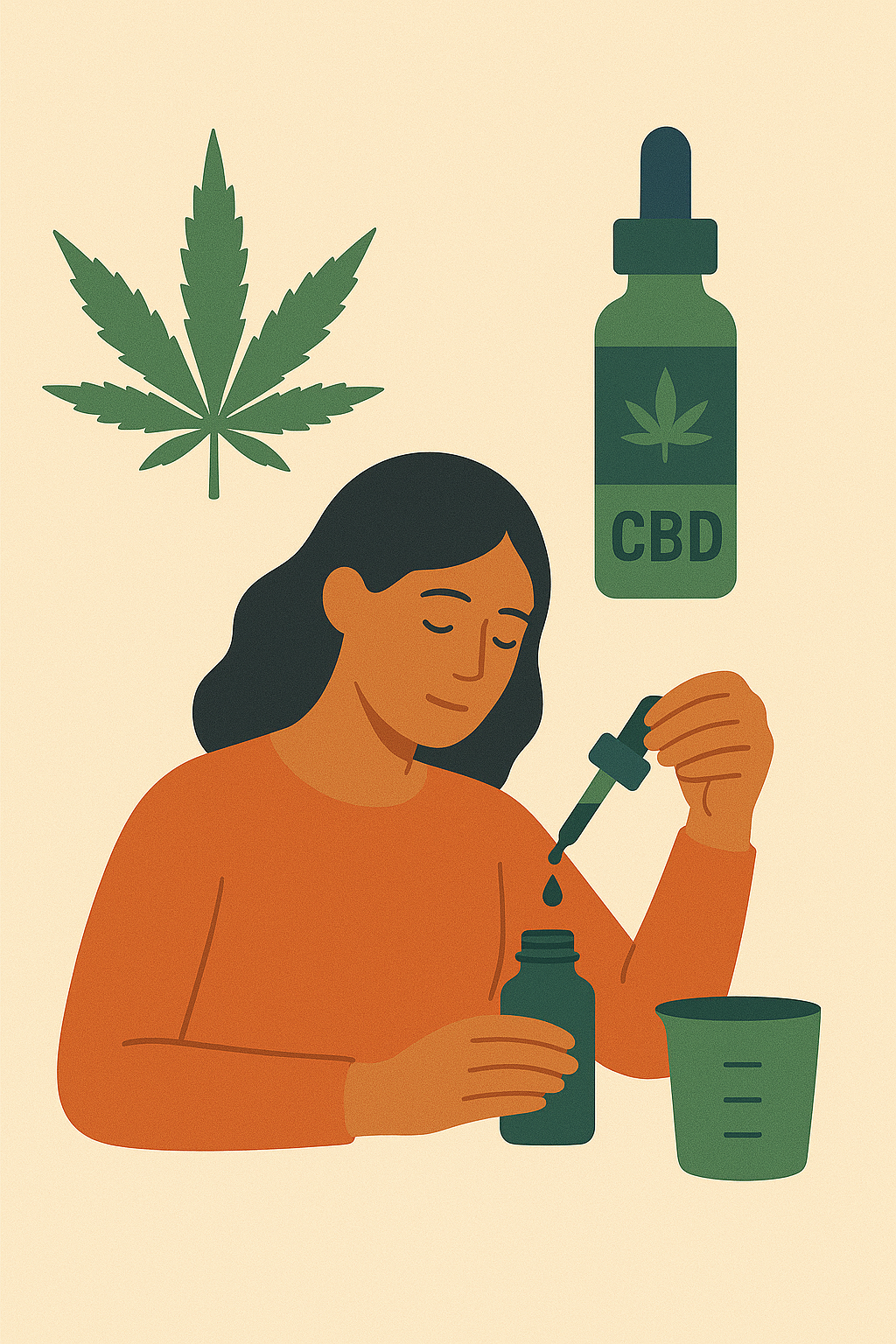
CBD oil is among the most popular and versatile CBD products in Denmark. It is widely used in both the wellness and cosmetics industries and is often associated with relaxation, recovery and general well-being. Many Danes use the oil to create calm in the body, care for the skin or as a natural supplement to a balanced lifestyle — although it is not allowed to be marketed as a medicine.
CBD oil is made by extracting cannabidiol (CBD) from industrial hemp (Cannabis Sativa L.) and then mixing the extract into a carrier oil, typically hemp seed oil , coconut oil (MCT) or olive oil . There are different types of oil depending on the extraction method and content:
- Full-spectrum: Contains the full spectrum of cannabinoids (including THC below 0.2%), terpenes and flavonoids.
- Broad-spectrum: Contains multiple cannabinoids and terpenes, but no THC .
- CBD isolate: Contains only pure CBD without other cannabinoids.
Seller must:
- Sell the oil as an aromatic oil or technical oil without special approval.
- Market the oil for cosmetic or technical purposes, not as medicine, unless approved by the Danish Veterinary and Food Administration.
- Approval as a dietary supplement requires documentation of safety and efficacy.
Sellers must not:
- Advertise medical effects without official approval.
- Claiming that CBD oil can cure or treat diseases without documentation.
Buyer must:
- Buy and own CBD oil as long as the THC content is below 0.2%.
- Use the oil for aroma, skin care and technical purposes, but not for medical treatment without advice.
Detail:
CBD oil comes in different strengths, typically measured in percentages (e.g. 5%, 10%, 20%). The higher the strength, the greater the concentration of CBD, but the THC limit must never be exceeded.
🌸 CBD tops (flowers)
CBD flowers are dried hemp flowers with low THC content, often used for flavoring purposes.
Seller must:
- Sell flowers from EU-approved hemp.
- Market flowers as tea or collectibles.
- Provide correct information about content, origin and THC content.
Sellers must not:
- Advertise that the flowers can be smoked.
- Claiming medical effects without documentation.
Buyer must:
- Buy and own the flowers legally if the THC content is below 0.2%.
- Keep them private for your own use.
Detail:
CBD tops are in practice legal to own, but the smoking ban means that use can be a legal grey area. That's why they are often marketed as "tea" or "collectors' items."
💨 CBD hash
CBD hash are concentrated hemp products that often resemble traditional hash, but without the psychoactive THC level.
Seller must:
- Sell as a technical product or collector's item.
- Market with correct THC content.
Sellers must not:
- Sold as a smoking product.
- Claiming medicinal properties without documentation.
Buyer must:
- Buy and own if THC is below 0.2%.
Detail:
CBD hash typically comes in small blocks or pellets. The products are often tested by third-party laboratories to ensure legal THC levels.
🍬 CBD gummies and edibles
Edible CBD products are popular, but under Danish law, CBD is still considered a "novel food" , which means that it is not approved as a food product yet.
Seller must:
- Sell products, but only as products not intended for human consumption .
- Market correctly without giving the impression of food use.
Sellers must not:
- Market the products as food.
- Promise health effects without documentation.
Buyer must:
- Buy and own them legally.
- But according to the law, it is not legal to eat them — legally, it is a gray area.
Detail:
It is important to be aware that the regulations for CBD in food may change as the EU and the Danish Veterinary and Food Administration update novel food approvals.
🧴 CBD creams and cosmetics
CBD creams are often used for skin care and wellness, and they are subject to cosmetics legislation.
Seller must:
- Legally sell as cosmetics if they follow labeling and safety regulations.
- Market the product without medical claims.
Sellers must not:
- Claiming medical effects without documentation.
- Violate the rules on ingredient lists.
Buyer must:
- Buy and use the products freely.
Detail:
CBD in cosmetics must be properly labeled, including ingredient lists and warnings. Products with THC above 0.2% are illegal in cosmetics.
☕ CBD tea
CBD tea is a popular form of CBD, often used as a relaxation product.
Seller must:
- Sell hemp tea from EU-approved hemp.
- Document THC content below 0.2%.
Sellers must not:
- Exceeding the THC limit.
- Advertise with medical effects.
Buyer must:
- Buy and own legally.
Detail:
CBD tea is not approved as a food, but can be sold as a "flavored tea" or "collector's product" under current regulations.
💨 CBD e-liquid (for vaping)
CBD e-liquid is used in electronic cigarettes.
Seller must:
- Sell if the THC content is below 0.2%.
- Report the product to the Danish Safety Technology Authority.
Sellers must not:
- Do not register.
- Sell with higher THC content.
Buyer must:
- Buy and own legally.
Detail:
CBD e-liquid must comply with both cosmetic and product legislation, as well as safety requirements for vaping products.
🧘 Wellness products (bath bombs, massage oil, pet care, etc.)
CBD is used in many wellness products, but the regulations depend on the product's use.
Seller must:
- Sell legally if the THC content is below 0.2%.
- Follow labeling and safety regulations.
Sellers must not:
- Making medical promises without documentation.
Buyer must:
- Free to buy and own.
Detail:
Many wellness products are marketed as "relaxation" or "care products" to avoid medical claims.
✅ Conclusion
- Buyer: May own all types of CBD products in Denmark if the THC content is below 0.2%.
- Seller: Must be very aware of how products are marketed and categorized. Many products may only be sold as technical goods or collectibles — not as food or medicine.
- Advice: Always buy from retailers who can document THC content with laboratory tests to avoid legal problems.
Share: